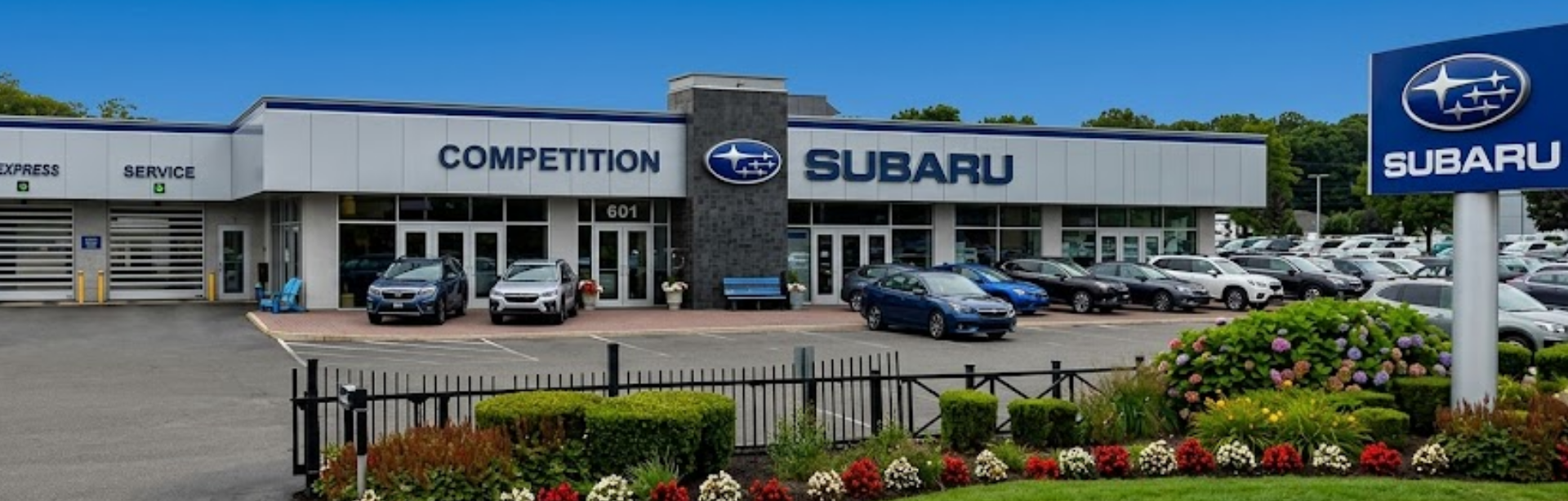
Author: Competition Subaru of Smithtown Team Selecting your next Subaru is more than just a purchase; it's the beginning of a lasting partnership that extends throughout your vehicle's life. Competition Subaru of Smithtown, situated conveniently for residents of Saint James and neighboring areas like Smithtown, Holbrook, South Setauket, and Ronkonkoma, is committed to supporting you with maintenance and ensuring a smooth ownership experience. The local community’s values resonate deeply with us, as we’ve built our reputation on trust and expertise. Whether you're navigating the tree-lined streets of Lake Avenue or heading out for a weekend adventure, our goal is to make sure you feel confident every time you hit the road. With our connections to the community, we understand what matters most to you as a driver in this area. Key Takeaways (TL; DR) Here are the most important points to remember when searching for a Subaru dealership in Saint James and nearby areas like Smithtown, Holbrook, South Setauket, and Ronkonkoma: All-Wheel Drive is Essential: Subaru vehicles are known for their standard all-wheel drive, providing increased traction and stability on tree-lined suburban roads, especially during rainy or snowy weather. Safety Features Save Lives: Many Subaru models come equipped with advanced safety technologies, such as EyeSight Driver Assist Technology, which enhances awareness and helps prevent collisions—critical for navigating busy roads like North Country Road and Middle Country Road. Local Commitment Counts: A dealership that is actively involved in the Saint James community, like Competition Subaru of Smithtown, reflects a commitment to customer care and reliability beyond just sales. Spacious Interiors for Family Adventures: Subaru SUVs, like the Outback and Forester, offer ample cargo space, making them ideal for family trips to parks like Caleb Smith State Park or Deepwells Farm County Park. Real-Time Inventory Matters: Look for dealers with live online inventory to ensure you have access to the latest Subaru models and specifications, saving you time and providing transparency. Warranty Coverage is Key: Subaru vehicles come with a 3-year/36,000-mile New Vehicle Limited Warranty, offering peace of mind for local drivers as they navigate their daily commutes or weekend adventures. What Are the Potential Pitfalls of Selecting the Wrong Subaru Dealer? Many Subaru owners in Saint James and nearby areas may overlook the long-term implications of choosing a subpar dealership until they encounter problems. An unreliable dealer can transform an exciting Subaru purchase into a frustrating experience. Common complications include voided warranties due to improper maintenance or the use of non-OEM parts. For instance, if you have a Subaru Outback and the dealer uses aftermarket brakes, this could lead to warranty issues down the line. Additionally, you may face unexpected fees that can significantly increase the final bill beyond what was initially advertised. Ultimately, a negative dealership experience can erode trust and cost you both time and money. According to the Better Business Bureau, consumers should be cautious when selecting dealerships, as complaints about service and hidden fees are common. Choosing a certified, customer-focused Subaru dealer from the start is the best way to safeguard your investment. What Should You Look For in a Trusted Subaru Dealership? Finding a reliable dealership for your Subaru in the Saint James area involves identifying key traits that reflect commitment to customer service and vehicle quality. Start by exploring online reviews on trusted platforms like DealerRater and the Better Business Bureau. Look for consistent feedback about transparency, reliability, and customer satisfaction; these are significant indicators of a reputable dealership. Additionally, ensure the dealership is officially certified by Subaru, confirming adherence to the manufacturer's strict standards for service and sales. A trustworthy Subaru dealership will also feature Subaru-certified technicians who receive ongoing training to stay updated on the latest models and technologies. Moreover, look for dealerships that provide clear service processes and visible parts inventory. These practices enhance trust and ensure you know what to expect when you bring your vehicle in for maintenance or repairs, whether you’re commuting along Middle Country Road (NY‑25) or heading to Nissequogue River State Park for a weekend getaway. Why Is Staff Longevity Important for Your Subaru Experience? Staff longevity plays a crucial role in the overall experience at your local Subaru dealership. When technicians and service advisors remain with the dealership for extended periods, it fosters a stable environment that enhances customer service. This stability benefits Subaru owners in Saint James and surrounding areas like Smithtown and Ronkonkoma. Experienced staff have in-depth knowledge of Subaru's hybrid and electric vehicle systems, ensuring they follow the latest safety procedures and service habits, which is especially important for models like the Subaru Solterra and Forester Hybrid. Moreover, their long-term experience allows for quicker diagnosis of issues, drawing on historical service knowledge that can recognize common failure patterns in local-use vehicles. Additionally, a team with low turnover builds lasting relationships with customers. They remember your vehicle's history, which allows them to provide personalized service that newer staff simply can't replicate. For residents commuting along Middle Country Road (NY-25) or heading to Deepwells Farm County Park, this personalized attention can make all the difference in maintaining your vehicle's performance. What Inquiries Should You Make When Choosing a Subaru Dealership? Asking the right questions can help you gauge the quality and reliability of a Subaru dealership in the Saint James area. Here are some essential points to consider as you navigate your options. Real-Time Inventory Updates: Verify if the dealership’s online inventory reflects current availability. Accurate listings prevent wasted trips and ensure you're aware of the Subaru models waiting for you on Middle Country Road (NY-25). Clear Pricing and Fees: Inquire whether they provide transparent, itemized pricing without hidden costs. This clarity is vital for budgeting, especially when considering financing options for a new Subaru. Subaru-Certified Technicians: Ask if their technicians are certified and trained specifically for Subaru vehicles. This expertise is crucial for proper maintenance and repairs, especially for advanced models like the Outback Wilderness or Forester Hybrid. Genuine Subaru Parts: Confirm that the dealership uses OEM parts for repairs. Using authentic Subaru parts ensures compatibility and longevity, particularly important for maintaining your vehicle's performance on local roads. EV/Hybrid Service Readiness: For those considering the Subaru Solterra or Crosstrek Hybrid, ask about their ability to service electric and hybrid models, including software calibration and battery maintenance. Financing Clarity: Discuss financing options, including Subaru Credit and any partnerships with local lenders. Understanding your options helps streamline the buying process and can provide more favorable terms. Warranty and Return Policies: Inquire about the specifics of their warranty and return policy for new and certified pre-owned Subarus. Knowing what coverage you have can provide peace of mind for your investment. What Should You Look for When Assessing a Subaru Dealership's Inventory? A dealership's inventory showcases its insight into the preferences of local drivers in Saint James and surrounding areas like Smithtown and Holbrook. This means you'll want to find a selection that not only includes popular models like the Subaru Forester and Outback but also reflects the features and configurations that meet your needs. Ensure the digital showroom is user-friendly, allowing for easy navigation through various filters such as model, trim, drivetrain, and color. Real-time inventory updates and VIN-specific details are essential for making informed decisions, especially if you’re commuting via North Country Road (NY-25A) or heading to Deepwells Farm County Park for a weekend adventure. Look for high-resolution images of the actual vehicles instead of generic stock photos, as this provides a clearer picture of what’s available. A transparent pricing structure with a detailed breakdown of fees will help you understand the full cost. For added convenience, a mobile-friendly site with effective filters ensures you can find the Subaru that fits your lifestyle, whether you're navigating the busy roads of Lake Avenue or enjoying a family outing at Nissequogue River State Park. How Does New Subaru Compare with Subaru Certified Pre-Owned? When considering your next vehicle in Saint James, you might wonder how a new Subaru stacks up against a Subaru Certified Pre-Owned (CPO) model. New Subarus come equipped with the latest technology and a full factory warranty, providing a fresh start for your driving adventures. On the other hand, Subaru Certified Pre-Owned vehicles offer a reliable blend of value and peace of mind, backed by a thorough certification process. To earn the Subaru Certified Pre-Owned designation, a vehicle must pass a rigorous 152-point inspection, ensuring that it meets high standards of quality and reliability. This means you can drive confidently, knowing your CPO Subaru has been carefully evaluated for performance and safety. For drivers around Smithtown, Holbrook, and Ronkonkoma, the choice between a new and CPO Subaru ultimately comes down to practical considerations. New models typically have a higher initial cost, but they come with a 3-year/36,000-mile limited warranty. CPO models, while more budget-friendly, offer a 7-year/100,000-mile powertrain warranty, making them an attractive option for those looking for value without sacrificing assurance. Moreover, both new and CPO Subarus include roadside assistance for peace of mind on the road. With the added benefits of extended coverage options available for CPO vehicles, shoppers can find a perfect match for their lifestyle, whether it's commuting along Middle Country Road (NY-25) or enjoying a weekend getaway to Caleb Smith State Park. Feature New Subaru Subaru Certified Pre-Owned (CPO) Warranty 3-year / 36,000-mile Limited Warranty 7-year / 100,000-mile Powertrain Warranty Inspection Factory quality assurance 152-point inspection Roadside Assistance Included with warranty 24/7 Roadside Assistance included Cost Higher initial cost Lower purchase price, excellent value Which Subaru Models Are Most Suitable for Drivers in Saint James? Subaru’s lineup is recognized for its all-wheel drive capability, robust safety features, and spacious interiors, making it a great choice for drivers in Saint James and the surrounding areas. Whether you're navigating the tree-lined streets of Smithtown or making a weekend trip to Caleb Smith State Park, there’s likely a Subaru model that aligns with your needs. For residents who prioritize reliability and versatility, models like the Subaru Forester and Outback stand out. The Forester, known for its spacious cabin and excellent visibility, is perfect for families heading to Deepwells Farm County Park. On the other hand, the Outback offers a rugged design and ample cargo space, ideal for those weekend adventures or grocery runs along Lake Avenue. All-Wheel Drive: Most Subaru models come standard with all-wheel drive, providing enhanced traction and stability on wet or snowy roads, especially during Long Island winters. Safety Ratings: Subaru vehicles consistently earn high safety ratings, a crucial factor for families commuting through busy areas like North Country Road (NY-25A) and Nesconset Highway (NY-347). Spacious Interiors: Models like the Subaru Ascent, with its three-row seating, cater to larger families or groups, making trips to the Smith Haven Mall comfortable and convenient. Fuel Efficiency Options: The Forester Hybrid and Crosstrek Hybrid offer eco-friendly choices without compromising on the space or capability needed for local excursions. Advanced Technology: Many Subaru models come equipped with the latest tech features, including Subaru’s EyeSight Driver Assist Technology, enhancing safety during congested commutes. Community Connection: Subaru owners often appreciate the brand's focus on outdoor adventures, which resonates well with the many parks and natural settings around Saint James. For local shoppers, it’s essential to consider how each model can adapt to your lifestyle. The spacious cargo area in the Crosstrek makes it easy to load up for a day at Nissequogue River State Park, while the Forester’s impressive visibility can be beneficial for navigating busy roads during peak hours. Explore more about Subaru’s offerings at Subaru's official website. Subaru SUVs and Crossovers Subaru's SUV lineup is designed for versatility and reliability, making them ideal for navigating the tree-lined roads of Saint James, Smithtown, and beyond. From compact crossovers to spacious family haulers, these vehicles provide the safety and capability that local drivers seek. 2026 Subaru Forester: The Forester is a compact SUV equipped with Subaru's renowned Symmetrical All-Wheel Drive, perfect for local winter conditions along North Country Road (NY-25A) or during weekend adventures at Caleb Smith State Park Preserve. With a spacious interior and advanced safety features, it's well-suited for family outings or daily commutes. 2026 Subaru Outback: More than just a wagon, the Outback combines SUV-like capabilities with a comfortable ride and ample cargo space, making it perfect for trips to the St. James General Store or family beach days. Its rugged design and X-MODE® technology enhance traction on slippery roads, ensuring you stay secure even in challenging weather. 2026 Subaru Crosstrek: This subcompact crossover offers excellent fuel efficiency and the versatility of a compact SUV. With a ground clearance that handles the occasional rough terrain and a spacious interior, the Crosstrek is ideal for navigating local parks or running errands along Lake Avenue. Plus, its EyeSight® Driver Assist Technology provides peace of mind during busy commutes. 2026 Subaru Ascent: If you need a family-friendly vehicle with three rows of seating, the Ascent delivers. With a towing capacity of up to 5,000 lbs, it’s perfect for hauling kayaks to the nearby Nissequogue River or transporting gear for camping trips. Its advanced safety features and spacious interior are well-suited for family adventures and school drop-offs. 2026 Subaru Wilderness Models: The Wilderness variants of the Forester, Outback, and Crosstrek offer enhanced off-road capabilities, ideal for exploring trails in the Moriches area or trips to Burke Veterans Memorial Park. With increased ground clearance and rugged features, these models are built for outdoor enthusiasts looking for adventure. For residents of Saint James and nearby communities, Subaru's focus on safety, reliability, and all-wheel-drive capability makes them a fitting choice for both daily driving and weekend escapades. Whether you're commuting on Nesconset Highway (NY-347) or heading to the local mall, these models provide the comfort and confidence you need. Electric SUVs and Crossovers from Subaru For drivers in Saint James and surrounding areas, Subaru's move toward electrification brings exciting options with a focus on efficiency and safety. The Subaru Solterra stands out as a key all-electric SUV designed to meet the needs of eco-conscious drivers. Subaru Solterra: As Subaru's first all-electric SUV, the Solterra combines an adventurous spirit with eco-friendly technology. It's equipped with features that enhance both comfort and safety, making it a great option for daily commutes along Middle Country Road (NY-25) or weekend trips to local parks like Caleb Smith State Park Preserve. Subaru Trailseeker: This upcoming electric SUV promises to deliver the brand's renowned all-wheel-drive capability while catering to the needs of modern drivers. Local residents will appreciate its potential for handling the seasonal weather conditions typical of Long Island, providing traction and confidence on tree-lined suburban roads. Subaru Uncharted: Another anticipated electric model, the Uncharted is designed for those who value exploration and versatility. Its efficient electric powertrain suits various driving needs, whether navigating through Saint James or embarking on adventures to the Nissequogue River State Park. When considering an electric vehicle, local shoppers should keep in mind: Charging Options: Many homeowners in Saint James may find it convenient to install a home charging station, especially with the availability of public chargers along major routes like Nesconset Highway (NY-347) and North Country Road (NY-25A). Driving Patterns: For daily commuters, understanding how seasonal changes can impact electric range is essential. Cold winter months may affect battery performance, making it important to plan for potential range variations during colder weather. Subaru Sedans: Reliable Choices for Saint James Drivers For drivers in Saint James and the surrounding areas, Subaru sedans offer a blend of comfort, safety, and advanced technology, making them ideal for both daily commutes and weekend adventures. The Subaru Impreza and WRX stand out as practical options that fit seamlessly into the lifestyle of local residents. 2026 Subaru Impreza: Available in the Sport and RS trims, the Impreza provides a roomy interior with an advanced infotainment system that includes an 11.6-inch SUBARU STARLINK® touchscreen. This model is particularly suited for daily drives along busy routes like Middle Country Road (NY-25) and Lake Avenue, ensuring you stay connected and entertained. 2026 Subaru WRX: Known for its sporty handling and all-weather capability, the WRX is perfect for those who value performance. It features Symmetrical All-Wheel Drive for confident traction, especially useful during Long Island's winter months when snow and ice can impact driving conditions. When considering a sedan, Saint James shoppers can benefit from: Safety Features: Many Subaru models are equipped with EyeSight® Driver Assist Technology, providing peace of mind during commutes to Stony Brook University or while navigating local traffic. Spacious Interiors: With ample cargo space, the Impreza's 20.4 cubic feet can accommodate weekend gear for trips to nearby parks like Caleb Smith State Park Preserve or Nissequogue River State Park. Why Should You Choose Subaru-Certified Service Over a Local Mechanic? Opting for service at a Subaru-certified dealership ensures your vehicle receives the best care possible. While local mechanics may offer attractive pricing, they often lack the specialized tools and training that Subaru technicians possess. Choosing a certified Subaru center means your vehicle is handled by experts familiar with its unique systems. This distinction can significantly impact performance, safety, and resale value, vital for drivers in areas like Saint James and nearby Smithtown. What Does “Subaru-Certified” Actually Mean? A Subaru-certified service department meets the stringent standards set by Subaru of America, ensuring only the highest quality maintenance and repairs are performed on your vehicle. Technicians in these centers undergo extensive training specifically on Subaru models and systems, using only Genuine Subaru OEM parts designed for your vehicle. This certification guarantees that all service, from routine oil changes to intricate repairs, is conducted to factory specifications. How Does Dealer Service Compare to a Local Mechanic? Many Subaru owners contemplate whether visiting a local mechanic could save them money. While some independent shops do offer quality work, they often cannot match the assurances provided by a certified Subaru dealership. Independent mechanics may use aftermarket parts, potentially affecting your vehicle's performance and possibly voiding your factory warranty. They also lack access to Subaru's proprietary diagnostic tools and the latest technical service bulletins. For vehicles equipped with advanced systems such as EyeSight® Driver Assist Technology or hybrid powertrains like the Subaru Forester Hybrid, specialized knowledge is not merely beneficial—it's essential for proper maintenance. What Are the Benefits of Financing Through a Subaru Dealer? Understanding auto financing can be complex, but working with a Subaru dealership in Saint James can streamline the process. Their finance centers, in partnership with Subaru Motors Finance (SMF), assist in finding competitive rates tailored to your needs. A reputable finance department prioritizes transparency, clearly explaining each aspect of your loan or lease agreement without confusing terminology. This approach helps you make informed decisions that align with your financial situation. What Can I Expect from a Subaru Dealership Finance Center? At a Subaru finance center, you can expect a supportive environment where exploring your options is encouraged. They typically provide digital pre-approval tools, potentially saving you time during your visit. You'll receive straightforward explanations of terms, interest rates, and optional add-ons such as GAP insurance or maintenance plans. The finance team will guide you through the advantages and disadvantages of leasing versus financing, considering your specific driving habits and future needs. Should I Lease or Finance My Subaru? Your choice between leasing and financing will depend on your lifestyle and long-term vehicle goals. Leasing often offers lower monthly payments, giving you the chance to drive a new Subaru every few years—ideal for those who enjoy having the latest features. Conversely, financing allows you to build equity in your vehicle. Once your loan is paid off, you own your Subaru outright, which can be beneficial if you plan to keep it for a long time without ongoing payments. If your driving mileage is below 15,000 miles annually and you prefer new technology, leasing might be suitable. However, financing is a better option for those who value ownership and plan to keep their vehicle for many years. How Can I Maximize My Trade-In Value and Make the Right Decision? For Subaru drivers in Saint James and nearby areas, trading in your vehicle can significantly reduce the cost of your new Subaru. Understanding how to get the best value and when to trade can lead to a more rewarding experience. How can I get the best value for my trade-in? To ensure you get the highest value for your Subaru trade-in, focus on presenting your vehicle in the best light. Here are a few key strategies: Clean Vehicle: A well-maintained and clean vehicle attracts higher offers. Ensure both the interior and exterior are spotless before the appraisal. VIN-Specific Appraisal: Provide your Vehicle Identification Number (VIN) to receive a precise appraisal tailored to your Subaru's specifications. Local Market Demand: Research current market trends for Subaru models in your area. Demand in Saint James can vary, influencing your trade-in value. Reconditioning Transparency: Be open about any repairs or maintenance performed on your Subaru, as this can enhance buyer confidence. KBB/Edmunds Valuation References: Using resources like Kelley Blue Book and Edmunds can help establish a fair market value for your vehicle. Should I sell my car privately or trade it in? Choosing between a private sale and a dealership trade-in involves weighing convenience against potential profit. A private sale might yield a higher price, but it comes with responsibilities like managing the sale process, advertising, and handling paperwork. On the other hand, trading in your Subaru at a dealership simplifies the process, allowing you to apply the trade-in value directly to your new purchase, which is especially advantageous for residents in Saint James. Here are some considerations: Time: Selling privately requires more time and effort, while trading in is quick and straightforward. Safety: A dealership trade-in protects you from potential scams or safety concerns associated with meeting private buyers. Convenience: Dealerships streamline the entire process, making it easier for busy locals in Smithtown and Holbrook. When are smart times to shop in the area? Timing your Subaru purchase can significantly influence your savings. Look for model-year changeovers in late summer, month-end or quarter transitions, and holiday sales events to maximize potential deals. Local dealerships often align promotions with these periods, providing opportunities for better offers. Be sure to stay informed about any upcoming events at your local Subaru dealership to enhance your buying experience. Frequently Asked Questions (FAQs) How do I choose a trustworthy Subaru dealer in Saint James? To find a reliable Subaru dealer, look for one with positive reviews on Google and DealerRater. A trustworthy dealer will also have transparent pricing, a knowledgeable team, and a commitment to the local community, which is essential for ensuring good service and support. What are the differences between financing through a dealer and going to a bank or credit union for my Subaru? Dealer financing can offer convenience and sometimes special incentives, while bank or credit union financing may provide more competitive rates. It's important to compare the terms, interest rates, and overall costs to determine which option best fits your financial situation. What is the difference between buying a new Subaru and a Certified Pre-Owned (CPO) Subaru? A new Subaru comes with a full manufacturer warranty and the latest features, while a Certified Pre-Owned Subaru has been inspected and typically includes a limited warranty. CPO vehicles can be a more budget-friendly option, offering peace of mind with factory-backed coverage. What kind of service can I expect from Subaru-certified technicians? Subaru-certified technicians are trained specifically to work on Subaru vehicles, ensuring that they are familiar with the latest technologies, such as Advanced Driver Assistance Systems (ADAS). They use genuine Subaru parts for repairs, which helps maintain the integrity and performance of your vehicle. How can I schedule a test drive and check inventory at Competition Subaru of Smithtown? To schedule a test drive, you can visit the dealer's website or call their service desk. It's advisable to check their online inventory for availability before your visit, and consider making an appointment to ensure the vehicle you want is ready for you when you arrive. What is the trade-in process like at Competition Subaru of Smithtown? Competition Subaru of Smithtown offers a straightforward trade-in process. Their team will assess your vehicle's condition and history to provide a fair appraisal. This ensures you receive an offer that reflects its true value, allowing for a smoother transition to your new Subaru. About Competition Subaru of Smithtown As the team at Competition Subaru of Smithtown, we are proud to serve drivers across St. James, Smithtown, and the broader Long Island, New York community. Backed by the legacy of the Competition Automotive Group—founded in 1962 by championship race car driver Joseph C. Buzzetta—our family-owned dealership brings decades of trusted automotive expertise to every driver who walks through our doors. Beyond helping you find or service the perfect vehicle, we demonstrate our commitment to excellence through active participation in the Subaru Love Promise initiative and by giving back locally to organizations like the Smithtown Children’s Foundation, Stony Brook Children’s Hospital, and Paws of War. From our state-of-the-art facility equipped with factory-trained technicians to our deeply rooted family values, we treat every customer like a neighbor. Whether you need a new vehicle or expert maintenance, our dedicated team is here to deliver an unmatched, stress-free dealership experience built on integrity and decades of passion. Related Articles: Subaru Buying Guide for Saint James, NY Selecting the Right Subaru Service Department in Saint James, NY { "@context": "https://schema.org", "@graph": [ { "@type": "WebSite", "@id": "https://www.competitionsubaru.com/#website", "url": "https://www.competitionsubaru.com/", "name": "Competition Subaru of Smithtown", "potentialAction": { "@type": "SearchAction", "target": "https://www.competitionsubaru.com/search?q={search_term_string}", "query-input": "required name=search_term_string" } }, { "@type": "WebPage", "@id": "https://www.competitionsubaru.com/blog/the-ultimate-guide-to-finding-the-best-subaru-dealer-in-saint-james-ny#webpage", "url": "https://www.competitionsubaru.com/blog/the-ultimate-guide-to-finding-the-best-subaru-dealer-in-saint-james-ny", "inLanguage": "en-US", "name": "Why Your Next Car Should Be a Subaru: The 2025 NY Buyers Guide", "isPartOf": { "@id": "https://www.competitionsubaru.com/#website" }, "breadcrumb": { "@id": "https://www.competitionsubaru.com/blog/the-ultimate-guide-to-finding-the-best-subaru-dealer-in-saint-james-ny#breadcrumb" } }, { "@type": "BreadcrumbList", "@id": "https://www.competitionsubaru.com/blog/the-ultimate-guide-to-finding-the-best-subaru-dealer-in-saint-james-ny#breadcrumb", "itemListElement": [ { "@type": "ListItem", "position": 1, "name": "Home", "item": "https://www.competitionsubaru.com/" }, { "@type": "ListItem", "position": 2, "name": "Blog", "item": "https://www.competitionsubaru.com/blogs" }, { "@type": "ListItem", "position": 3, "name": "Why Your Next Car Should Be a Subaru: The 2025 NY Buyers Guide", "item": "https://www.competitionsubaru.com/blog/the-ultimate-guide-to-finding-the-best-subaru-dealer-in-saint-james-ny" } ] }, { "@type": "AutoDealer", "@id": "https://www.competitionsubaru.com/#autodealer", "name": "Competition Subaru of Smithtown", "url": "https://www.competitionsubaru.com/", "logo": { "@type": "ImageObject", "url": "https://www.competitionsubaru.com/assets/logos/transparent/Subaru.png", "width": 600, "height": 60 }, "image": { "@type": "ImageObject", "url": "https://www.competitionsubaru.com/assets/logos/transparent/Subaru.png" }, "telephone": "631-904-0432", "address": { "@type": "PostalAddress", "addressLocality": "Saint James", "addressRegion": "NY", "postalCode": "11780", "addressCountry": "US" }, "openingHoursSpecification": [ { "@type": "OpeningHoursSpecification", "dayOfWeek": [ "Monday", "Tuesday", "Wednesday", "Thursday", "Friday" ], "opens": "09:00", "closes": "19:00" }, { "@type": "OpeningHoursSpecification", "dayOfWeek": "Saturday", "opens": "09:00", "closes": "17:00" } ] }, { "@type": [ "BlogPosting", "Article" ], "@id": "https://www.competitionsubaru.com/blog/the-ultimate-guide-to-finding-the-best-subaru-dealer-in-saint-james-ny#blogposting", "headline": "Why Your Next Car Should Be a Subaru: The 2025 NY Buyers Guide", "image": [ "https://www.competitionsubaru.com/assets/logos/transparent/Subaru.png" ], "datePublished": "2025-10-08T00:00:00+00:00", "dateModified": "2025-10-08T00:00:00+00:00", "author": { "@type": "Person", "name": "Competition Subaru of Smithtown Team" }, "publisher": { "@type": "Organization", "name": "Competition Subaru of Smithtown", "logo": { "@type": "ImageObject", "url": "https://www.competitionsubaru.com/assets/logos/transparent/Subaru.png", "width": 600, "height": 60 } }, "mainEntityOfPage": { "@id": "https://www.competitionsubaru.com/blog/the-ultimate-guide-to-finding-the-best-subaru-dealer-in-saint-james-ny#webpage" }, "description": "Discover why your next vehicle should be a Subaru in 2025 \u2014 including reliability, resale value, efficiency, and more for New York buyers.", "articleSection": [ "Introduction", "Reliability & Longevity", "Technology & Performance", "Ownership Value", "Buying Tips", "Frequently Asked Questions" ], "keywords": "2025 Subaru, Subaru buyer's guide, car buying NY, Subaru reliability", "wordCount": 1100 }, { "@type": "FAQPage", "@id": "https://www.competitionsubaru.com/blog/the-ultimate-guide-to-finding-the-best-subaru-dealer-in-saint-james-ny#faq", "mainEntity": [ { "@type": "Question", "name": "How do I choose a trustworthy Subaru dealer in Saint James?", "acceptedAnswer": { "@type": "Answer", "text": "To find a reliable Subaru dealer, look for one with positive reviews on Google and DealerRater. A trustworthy dealer will also have transparent pricing, a knowledgeable team, and a commitment to the local community, which is essential for ensuring good service and support." } }, { "@type": "Question", "name": "What are the differences between financing through a dealer and going to a bank or credit union for my Subaru?", "acceptedAnswer": { "@type": "Answer", "text": "Dealer financing can offer convenience and sometimes special incentives, while bank or credit union financing may provide more competitive rates. It's important to compare the terms, interest rates, and overall costs to determine which option best fits your financial situation." } }, { "@type": "Question", "name": "What is the difference between buying a new Subaru and a Certified Pre-Owned (CPO) Subaru?", "acceptedAnswer": { "@type": "Answer", "text": "A new Subaru comes with a full manufacturer warranty and the latest features, while a Certified Pre-Owned Subaru has been inspected and typically includes a limited warranty. CPO vehicles can be a more budget-friendly option, offering peace of mind with factory-backed coverage." } }, { "@type": "Question", "name": "What kind of service can I expect from Subaru-certified technicians?", "acceptedAnswer": { "@type": "Answer", "text": "Subaru-certified technicians are trained specifically to work on Subaru vehicles, ensuring that they are familiar with the latest technologies, such as Advanced Driver Assistance Systems (ADAS). They use genuine Subaru parts for repairs, which helps maintain the integrity and performance of your vehicle." } }, { "@type": "Question", "name": "How can I schedule a test drive and check inventory at Competition Subaru of Smithtown?", "acceptedAnswer": { "@type": "Answer", "text": "To schedule a test drive, you can visit the dealer's website or call their service desk. It's advisable to check their online inventory for availability before your visit, and consider making an appointment to ensure the vehicle you want is ready for you when you arrive." } }, { "@type": "Question", "name": "What is the trade-in process like at Competition Subaru of Smithtown?", "acceptedAnswer": { "@type": "Answer", "text": "Competition Subaru of Smithtown offers a straightforward trade-in process. Their team will assess your vehicle's condition and history to provide a fair appraisal. This ensures you receive an offer that reflects its true value, allowing for a smoother transition to your new Subaru." } } ] } ] }